
Workpiece Material
Identify the actual ferromagnetic grade and condition.
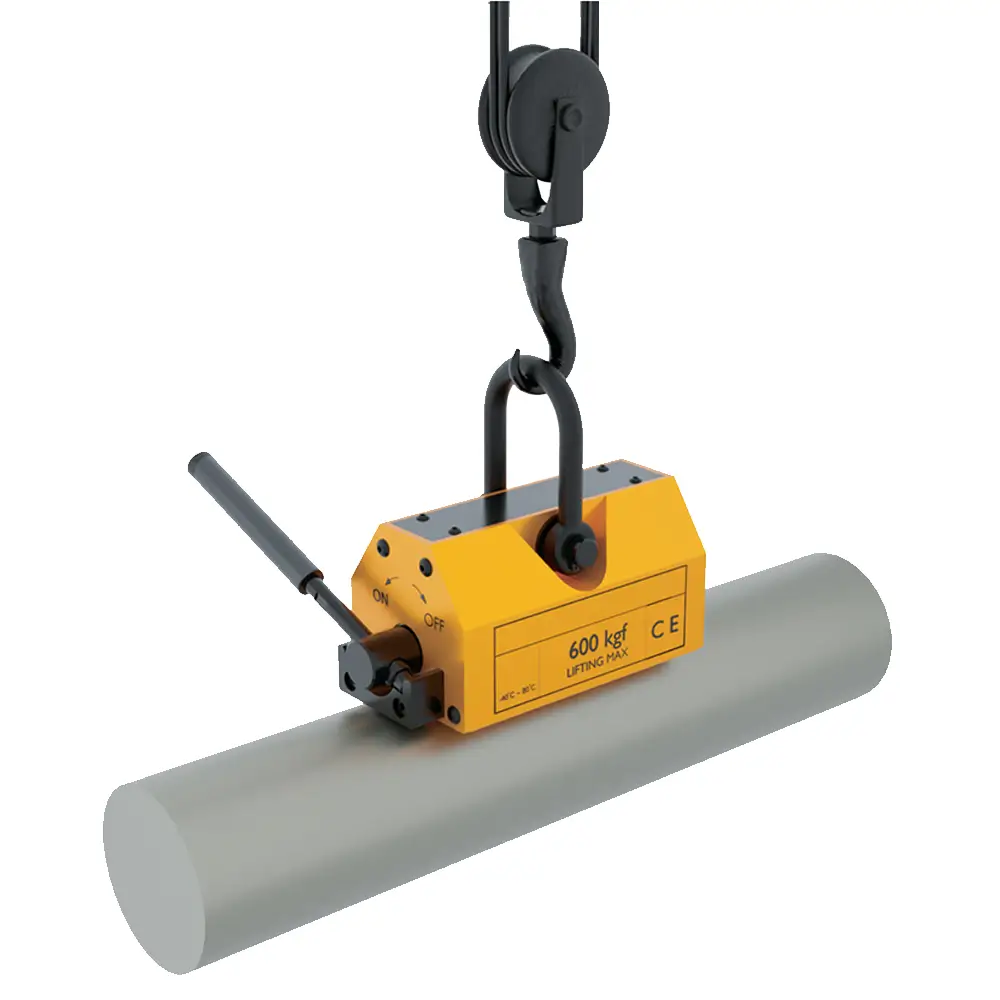
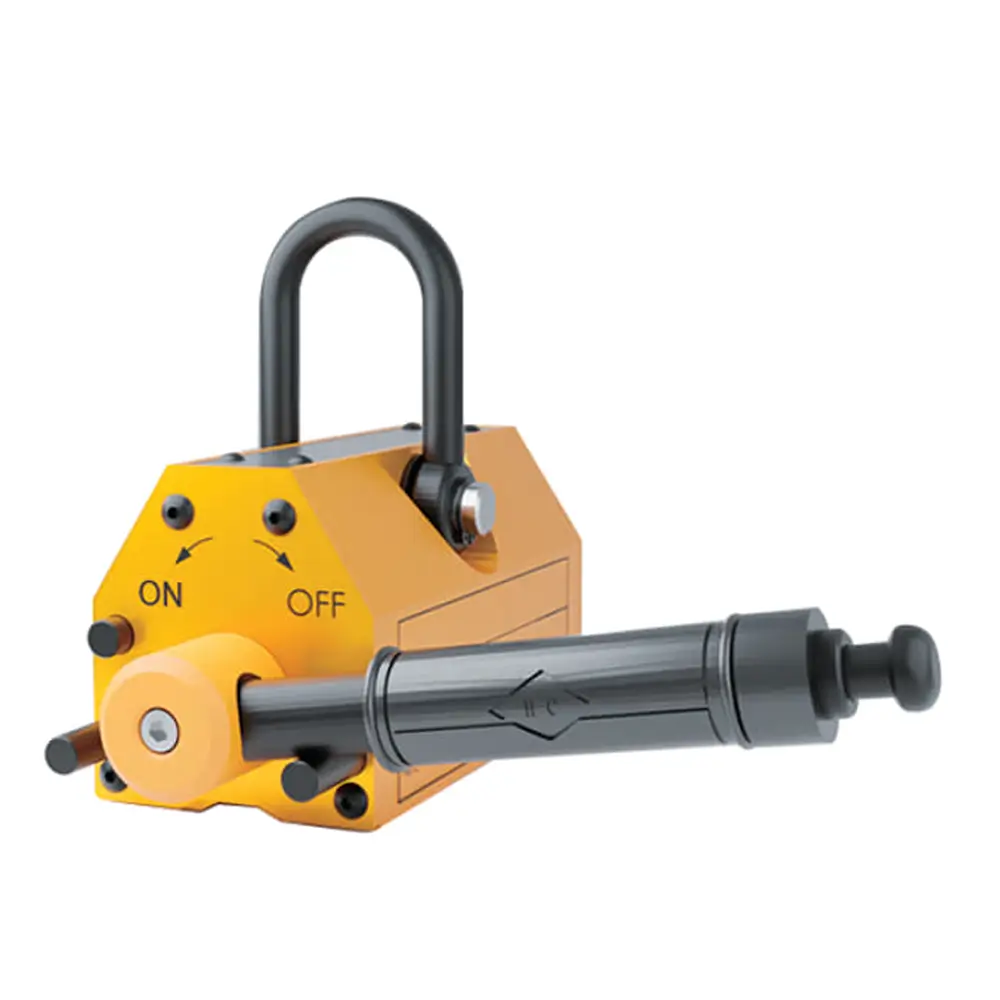
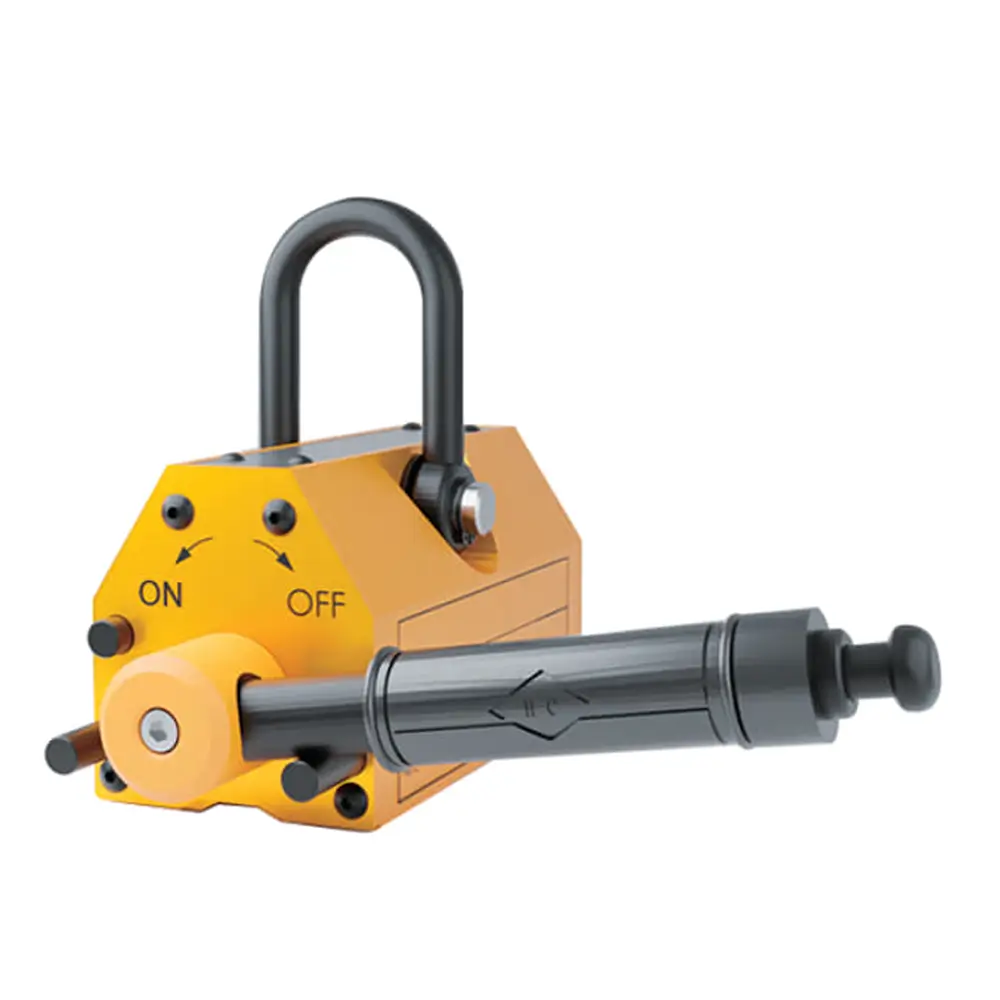
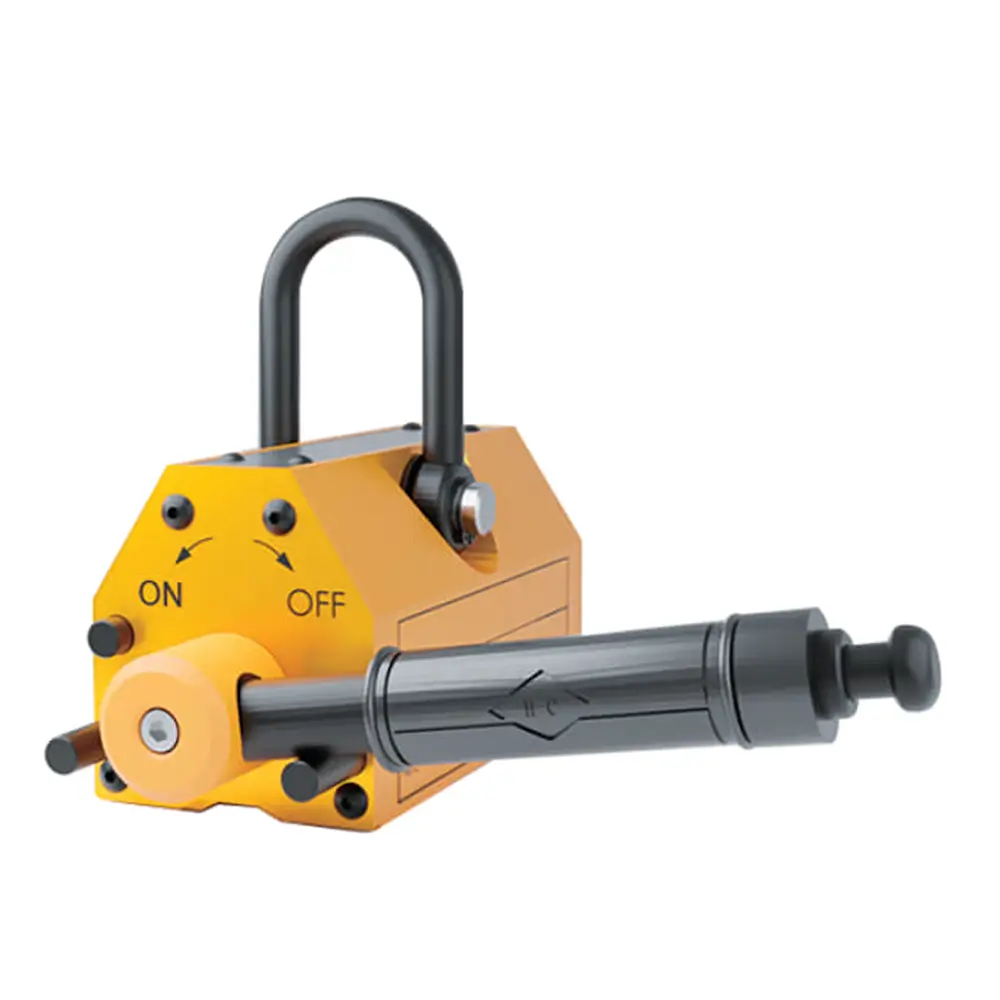
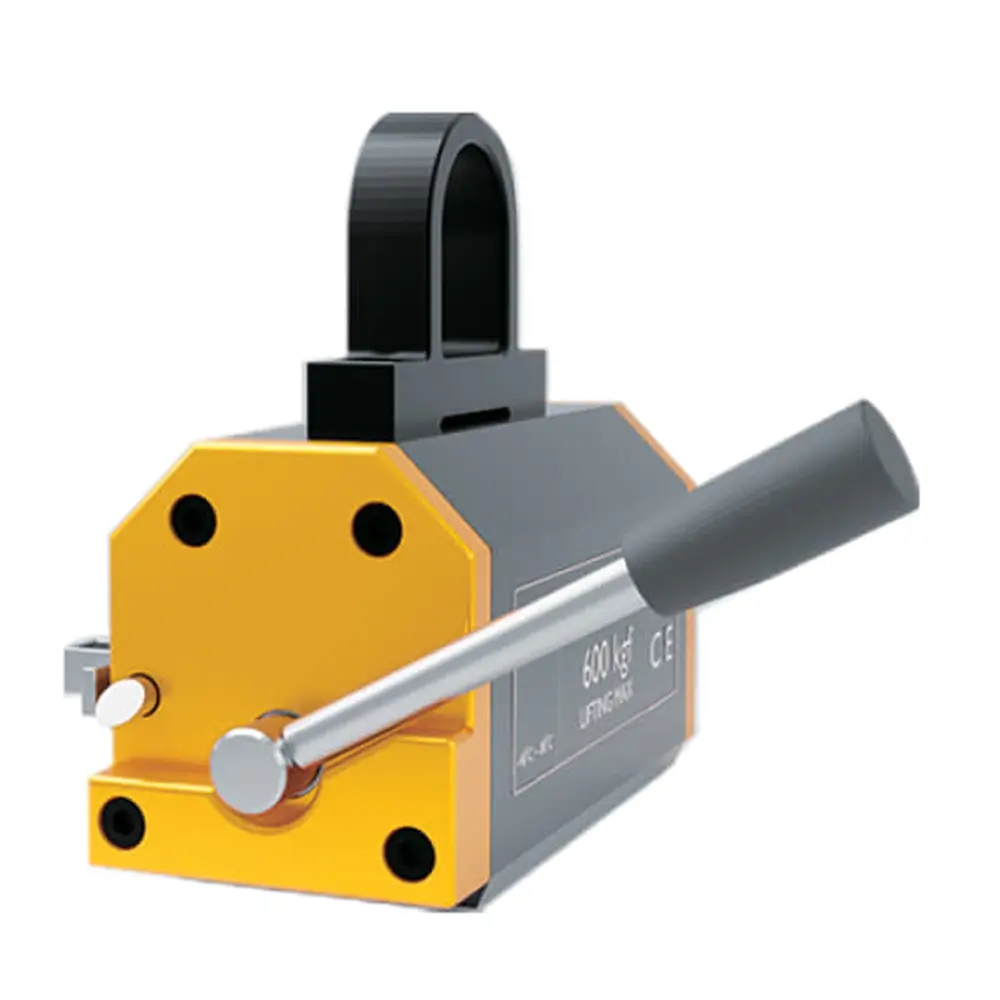
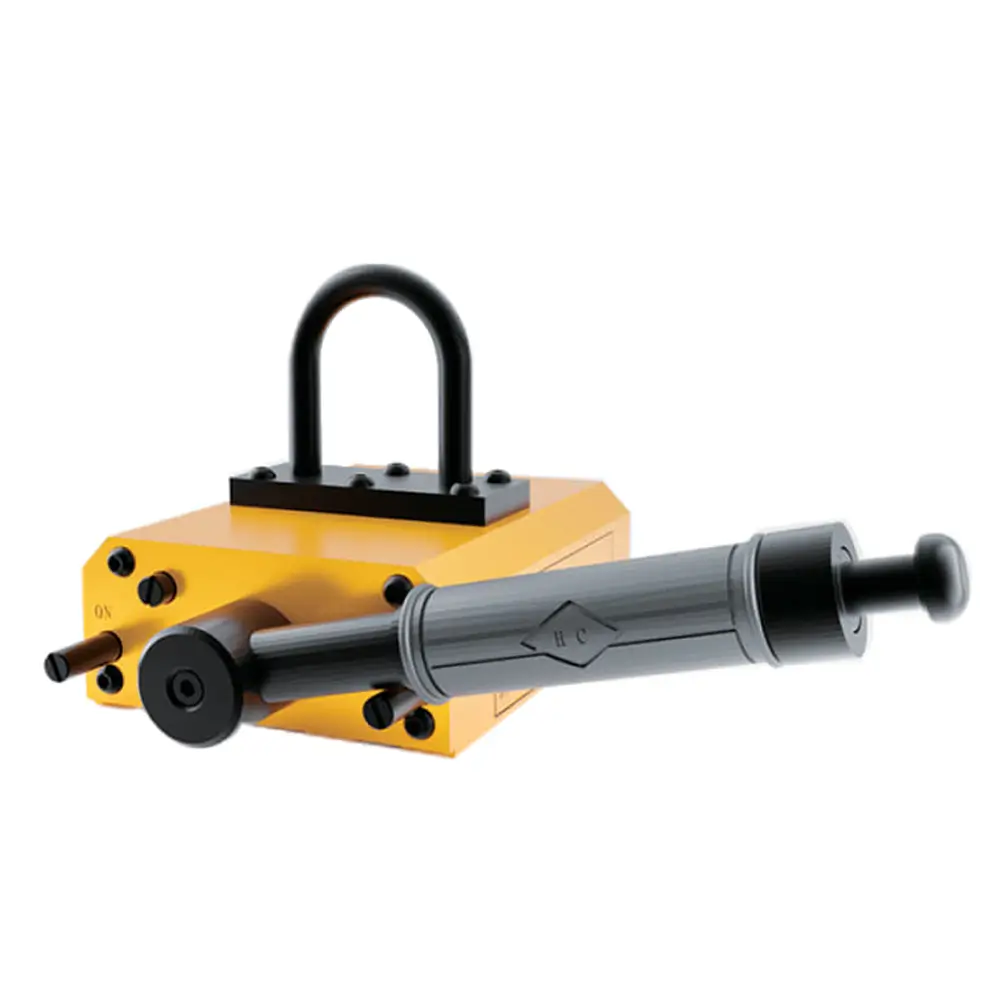
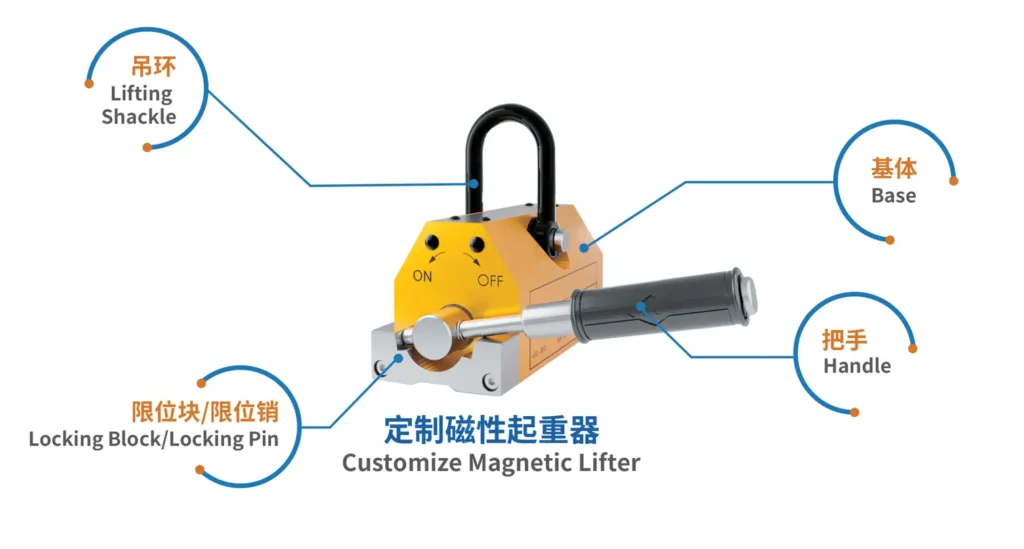
Magnetic lifter is composed of NdFeB and iron-Base, which is used for holding and releasing objects by ro-tating the handle between “ON” and “OFF” to control the magnetic circuit inside it. It consumes nopower and could bring permanent magnetic force with the characteristics of use safety, small volume, lightweight, large holding force and easy operation.
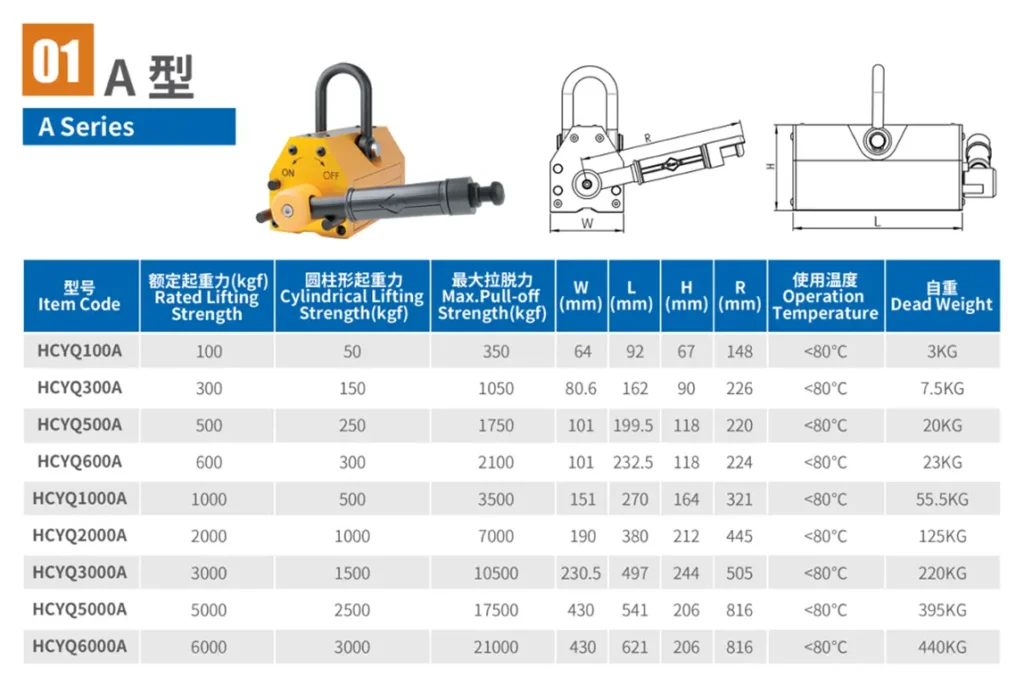
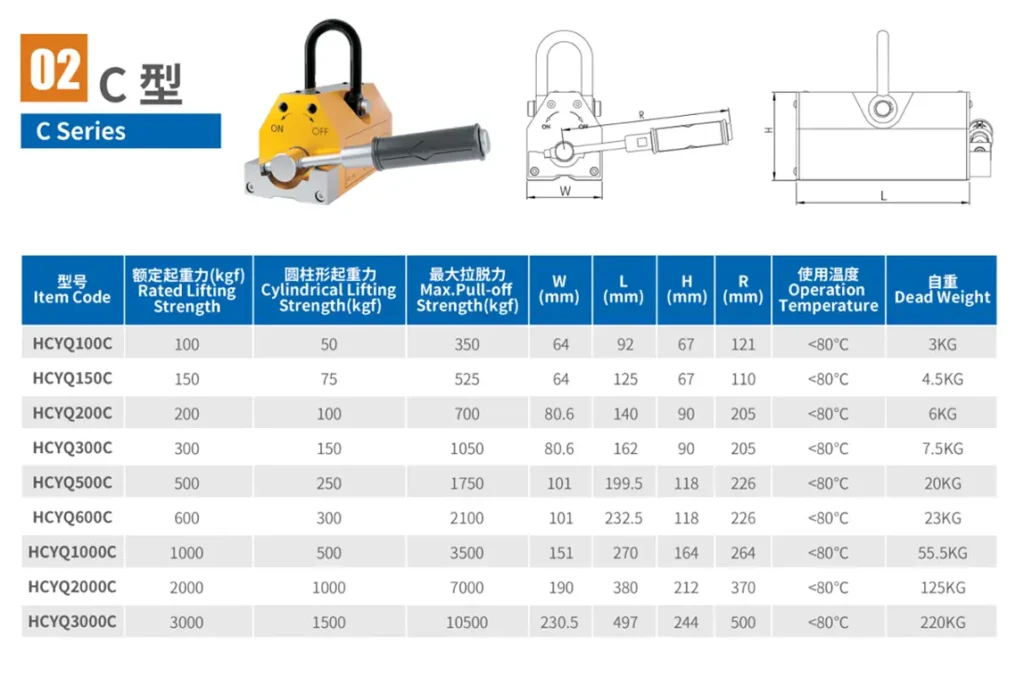
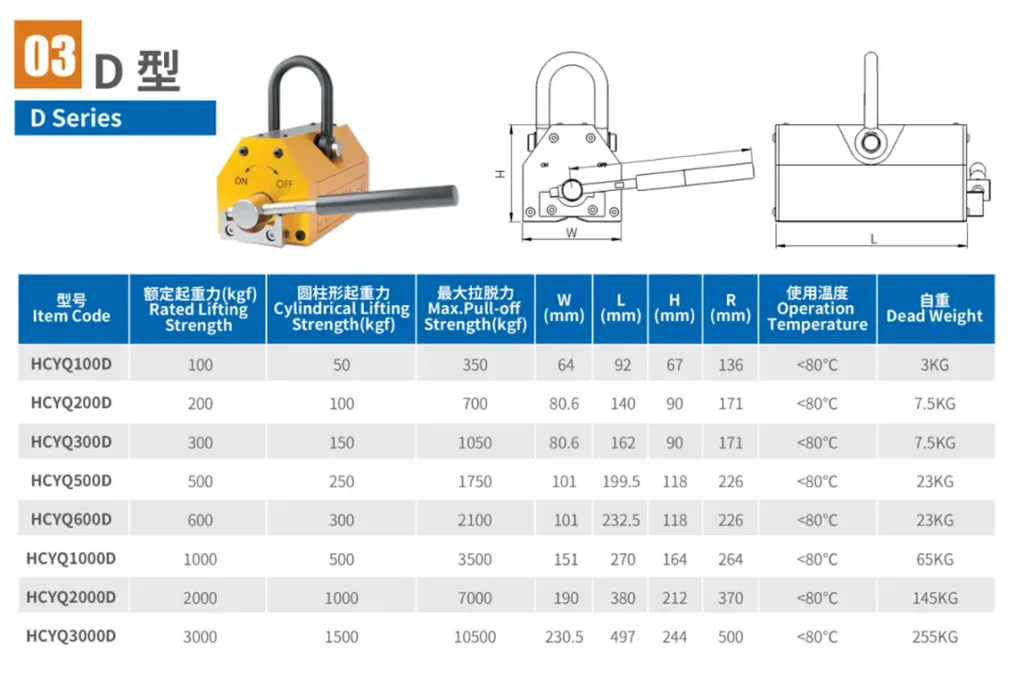
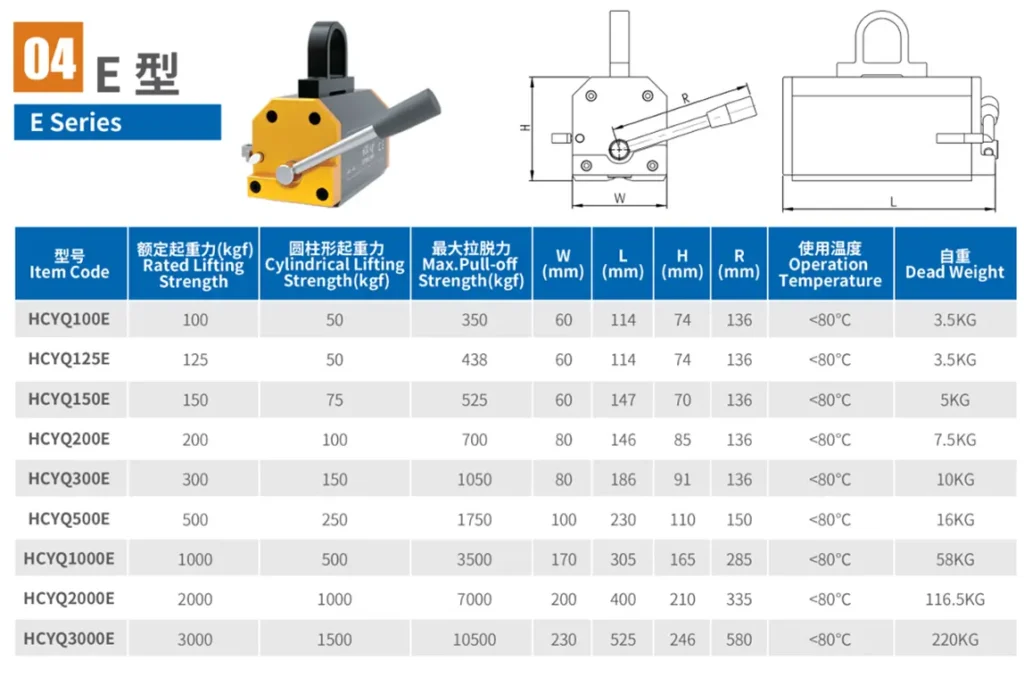
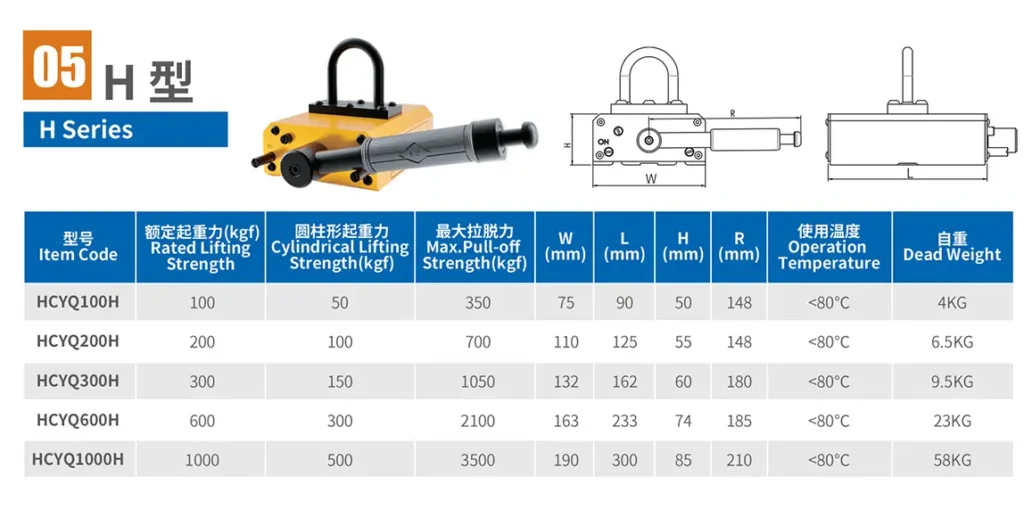
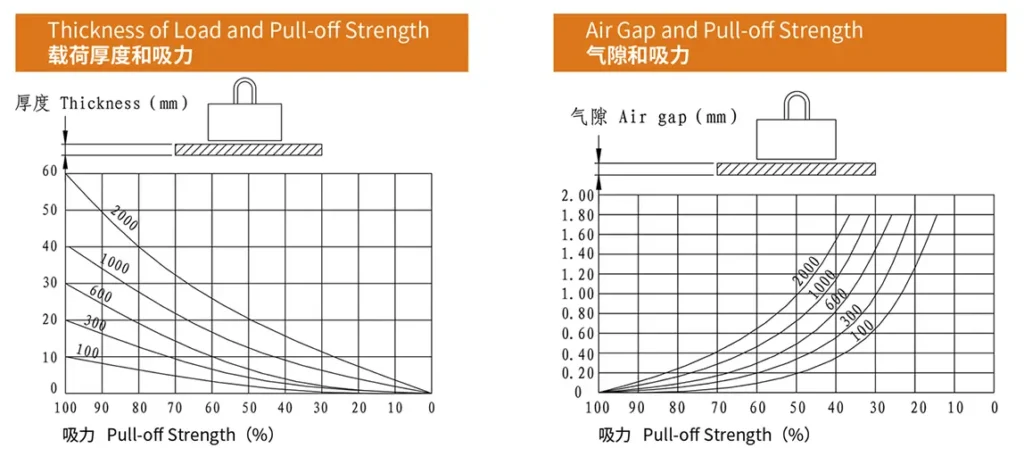
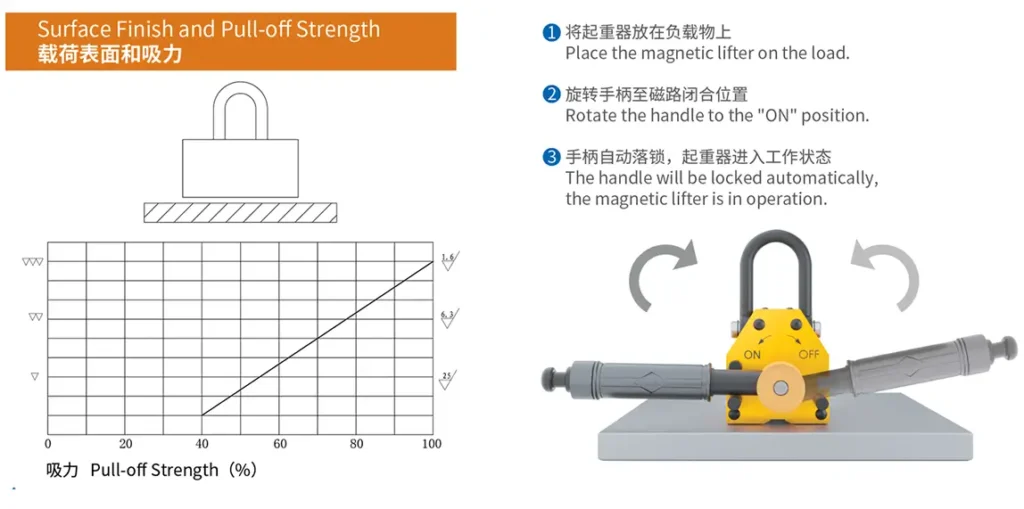
When the contact area or workpiece material changes, compare related magnetic handling products and verify the model-specific limits.
Nominal holding force cannot substitute for approval of the real workpiece, surface condition and lifting setup.
The specifications and included components for this exact product are described above. The guidance below supports sourcing decisions; it is not a claim that every option or capability is available for this SKU.
Identify the actual ferromagnetic grade and condition.
Confirm thickness, dimensions and load distribution.
Account for coatings, roughness, air gaps and contact area.
Describe lifting orientation and movement conditions.
Verify model-specific working limits and any reduction factors.
Confirm inspection, operating procedure and applicable handling standards.
Mechanical interfaces, operating duty, cooling and controls affect whether a configuration is suitable. Use the actual model information when discussing project requirements.
Review material, thickness, size and surface condition.
Confirm mass, geometry, center of gravity and handling orientation.
Evaluate contact area, clearances and activation method.
Request model-specific limits, inspection criteria and applicable lifting procedures.
Lifting and handling requirements depend on the actual load and jurisdiction. No capacity or safety certification is assumed without source evidence.
Verify the exact model's allowable load and conditions.
Review marking, operating instructions and inspection needs.
Align use with applicable worksite rules and trained operation.
Provide the following operating and integration details so the proposed configuration can be evaluated.
Review the actual load, select a candidate lifter and verify that its documented working conditions are appropriate before use.
Document material, shape, mass and surface.
Compare the published limits and required safety factors.
Confirm marking, operating instructions and required checks.
Agree quantity, inspection and shipment details.
Operating limits, documented ratings, test evidence, delivery scope and quotation terms must be confirmed for the exact configuration.
Share your intended application, torque or load requirements, operating conditions, interface drawings and project timing.